
Key Takeaways
|
What is DC Fast Charging?
DC fast charging is the quickest method of electric vehicle (EV) charging. Also known as Level 3 charging, high-powered DC fast charging stations deliver direct current (DC) to an EV’s battery. This typically enables vehicles to fully charge under an hour—much more quickly than Level 1 and Level 2 chargers, which use alternating current (AC). The convenience of DC fast charging can make publicly hosting these charging stations a profitable revenue stream for retailers. Furthermore, DC fast charging stations can provide value for EV fleet owners and power utilities as well.
How do DC fast charging stations work?
The electrical grid supplies AC power, but EV batteries store energy as DC. Electric vehicle stations supply power at several different charging speeds and handle the electrical conversion differently.
- Level 1 charging stations charge through a typical residential 120-volt (120V) AC outlet and can take 40 hours or more to charge an EV to 80% from empty.
- Level 2 equipment requires a 240V AC outlet in residential applications or a 208V AC outlet in commercial applications and can charge an EV to 80% from empty in 4 to 10 hours.
Both of these EV charging stations rely on the vehicle’s onboard charger to convert AC to DC. However, DC fast charging stations perform this conversion internally, supplying power much more efficiently and quickly.
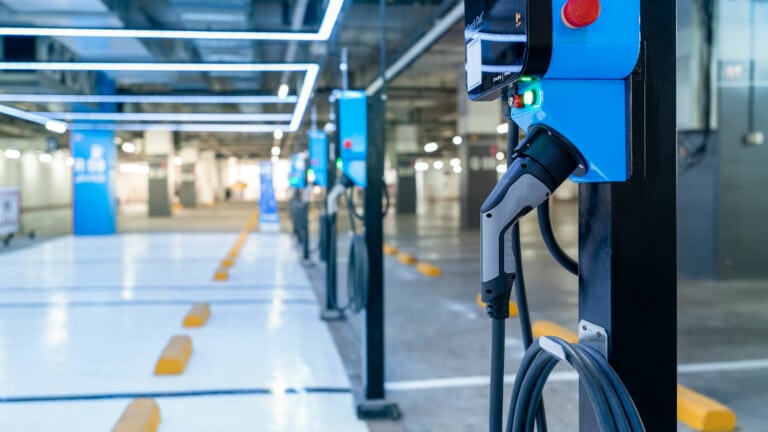
- Level 3 DC fast chargers can not plug into typical outlets and must be hardwired into a dedicated electrical circuit. Most require commercial-grade, three-phase electrical service (480V in the U.S. and 400V in Europe) to supply the high voltage and current needed to operate. These stations can usually charge an EV to 80% from empty in less than an hour.

Level 1: Residential |

Level 2: Commercial |
Level 3: Public |
EV owners report that charging speed is their most important consideration when using public chargers, so the growing number of public DC fast chargers is no surprise. In 2024, the global stock of fast chargers (with a power output higher than 22 kW and lower than 150 kW) reached 2 million. The United States expanded its fast chargers from 40,000 in 2023 to more than 50,000 in 2024. Meanwhile, the European Union also grew its network of fast chargers by nearly 50% to reach 71,000 in 2024.

How much does it cost to charge at a DC fast charging station?
DC fast charger fees can vary by charging network, location, and local energy prices, but their charging cost is typically higher than slower EV charging stations. In the U.S., drivers may pay about 40 cents or more per kilowatt-hour (kWh) for fast charging. In Europe, drivers may pay the least in Iceland (€2.89 per 100 km) and the most in Norway (€18.93 per 100 km). Overall, the cost of public charging is significantly higher than charging at home.
On the other hand, charge point operators (CPOs) thinking about offering DC fast chargers for public or internal use on their properties must consider upfront and ongoing costs when evaluating their decision. These can include hardware, installation, maintenance, network fees, and utility charges, as well as grants, incentives, new revenue streams, and business impact. It’s best to work with a trusted partner when evaluating if offering DC fast charging will create value for you.
What are the benefits of offering DC fast charging?
DC fast chargers can offer benefits to CPOs across the board. Here’s a look at a few key market segments and how providing DC fast charging can generate ROI for organizations.
Retailers
Many retailers—such as restaurants, hotels, supermarkets, convenience stores, and others—can generate additional revenue from EV charging stations while helping to expand customer access. Retailers can see benefits from offering chargers in terms of additional revenue and a positive reputation.
DC fast chargers specifically are turning profits for retailers and grocery stores. Shorter charging sessions offer retailers a greater opportunity for revenue than slower Level 2 charging by enabling a higher turnover rate that’s ideal for attracting on-the-go customers. DC fast charging aligns better with the typical retail dwell times of grocery stores, quick-serve restaurants, and convenience stores. The chance to charge more quickly can draw a broader base of EV drivers, increase store traffic, and create a premium charging experience that supports higher pricing and potential earnings.
EV fleets
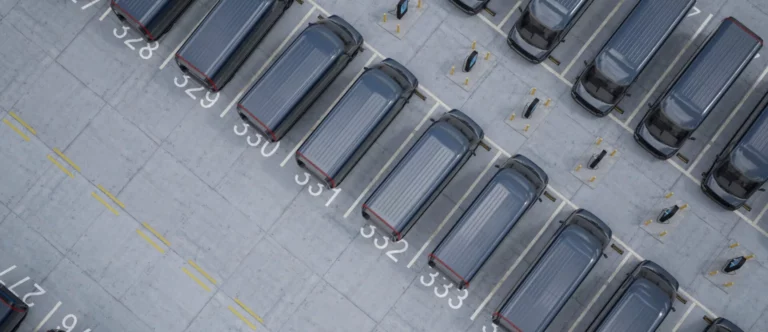
Electric vehicle fleet owners can also benefit from providing DC fast charging for their drivers. The ability to charge in minutes instead of hours minimizes vehicle downtime and allows for greater fleet utilization. Quicker charging supports flexible scheduling, enabling vehicles to recharge between routes or shifts rather than relying on overnight charging. DC fast charging may even reduce the total number of vehicles needed, lowering infrastructure and capital costs. Overall, strategically investing in DC fast charging stations can pay off in cost efficiency and fleet performance improvements for fleets.
Power utilities
Utilities also have reason to support and invest in DC fast charging infrastructure. The increased electricity demand from DC fast charging stations in commercial areas or along highway corridors can generate additional revenue and help utilities justify grid investments. Fast chargers can also serve as a strategic load that can be managed through demand response, time-of-use pricing, or smart charging programs, enabling utilities to balance the grid more efficiently. Supporting DC fast charging also allows utilities to meet government and regulatory goals for transportation electrification, carbon reduction, and grid modernization, while providing a path to engage with commercial customers and pilot new services such as vehicle-to-grid (V2G).
Why is Driivz ideal for DC fast charging?
| EV Charger Power Draw | |
| Level 1 | 1 to 2 kW |
| Level 2 | 7 kW to 19 kW |
| Level 3 (DC fast chargers) | 50 to 350+ kW |
Driivz’ EV charging and energy management software enables industry players from retailers to EV fleet owners, power utilities, and others to optimize and monetize EV charging networks. DC fast chargers draw a significant amount of power, which can lead to high operational costs. Smart energy management can optimize charging infrastructure, maximize energy resource utilization, and reduce TCO through smart charging. Additionally, real-time monitoring can detect and automatically resolve operational issues remotely to maintain reliability and further reduce costs. Reports and analytics-driven insights also empower decisions to make the most effective business and operational decisions. In all, Driivz solutions combined with DC fast charging can position both drivers and industry stakeholders for success.